

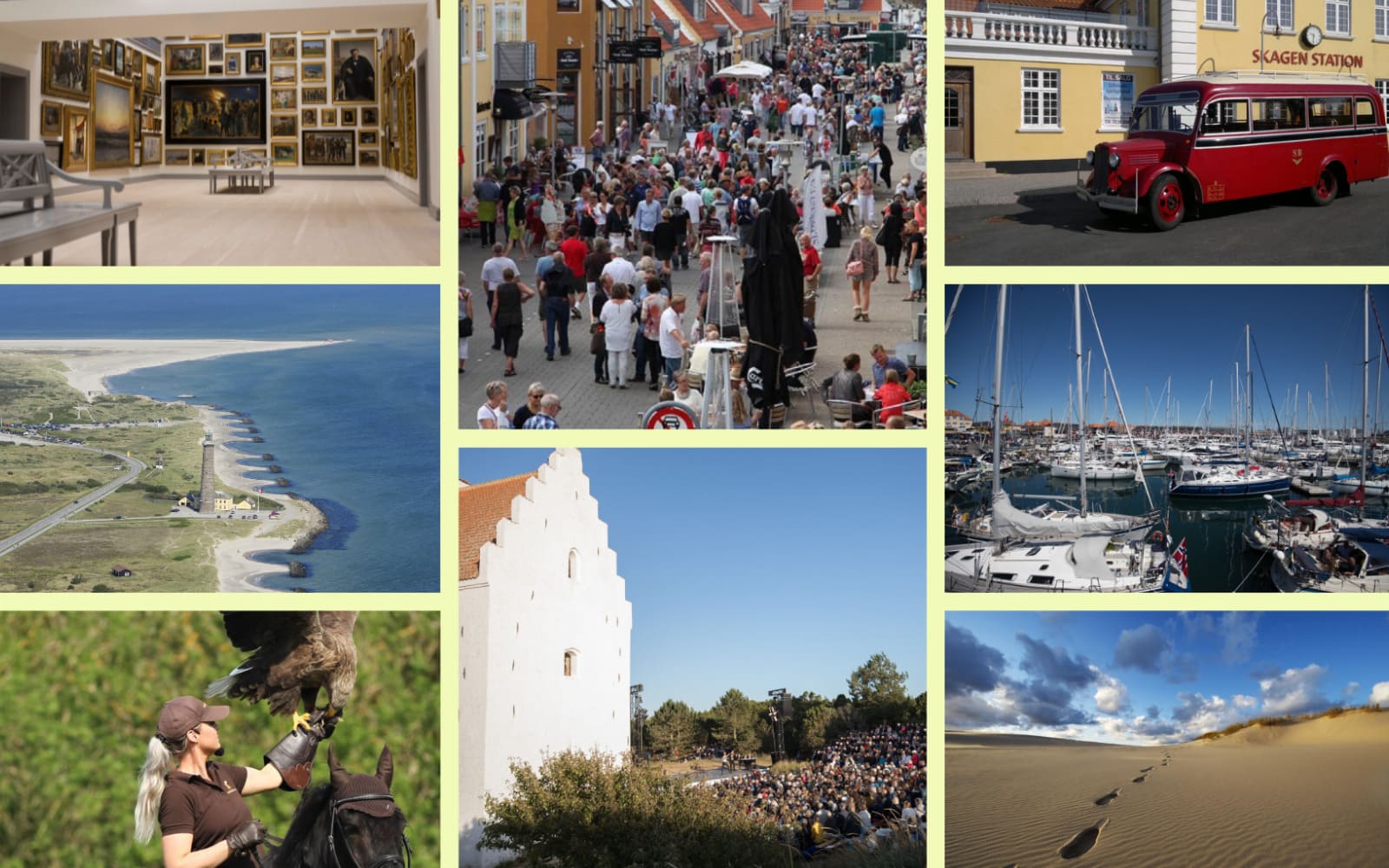
Experience magical Skagen all year round. Known for its special light, relaxed atmosphere, and wide sandy beaches, Skagen has more sunshine hours than most places in Denmark. This guide points you toward the best experiences in and around town: Grenen and Råbjerg Mile, cultural highlights, classic Danish seaside charm, and the harbour life that makes Skagen so memorable.
Attractions:
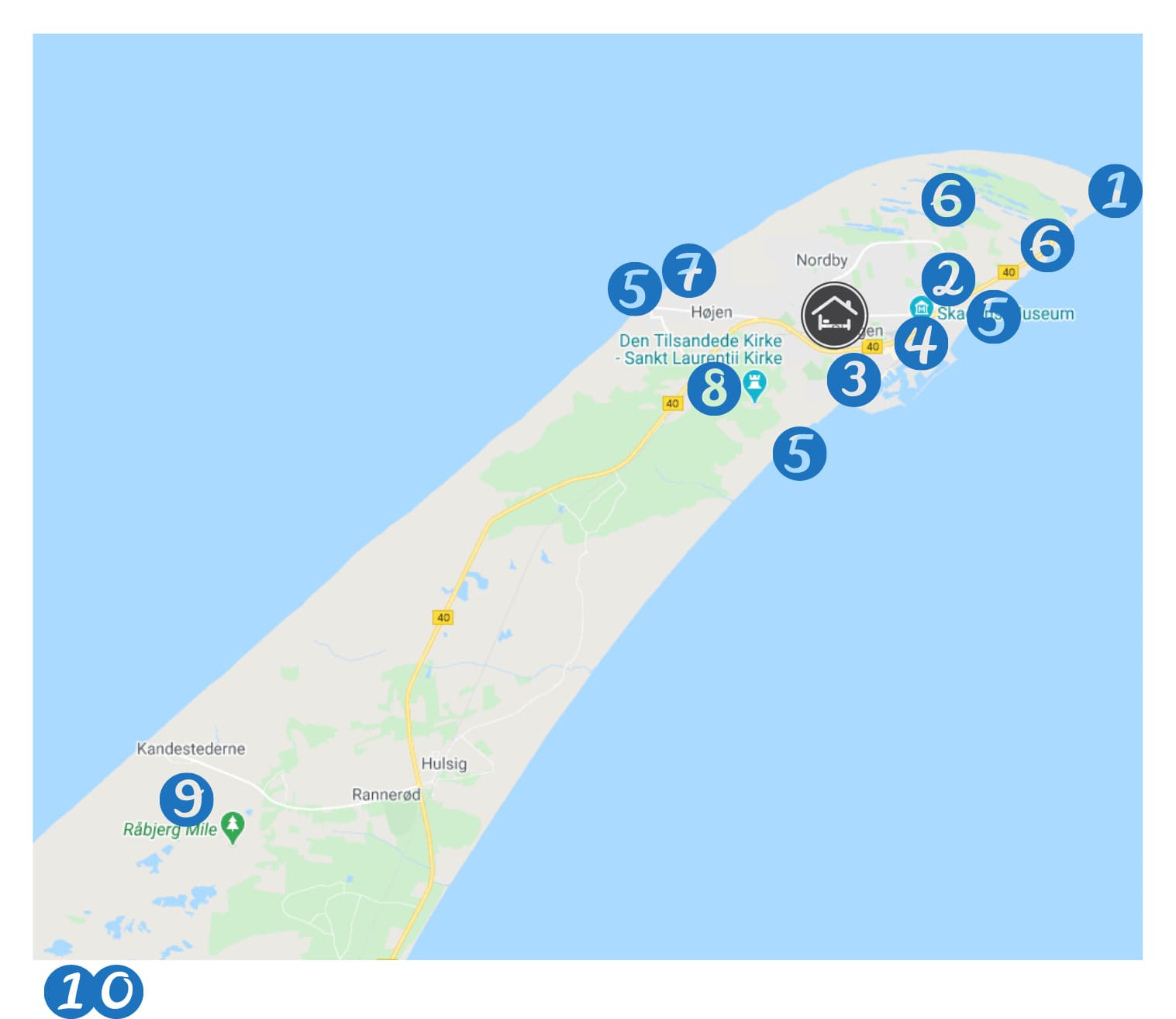
1. Grenen and Sandormen
2. Skagen Museum
3. Vintage bus tour
4. The pedestrian street and marina
5. The most popular beaches
6. Skagen Grey Lighthouse and Skagen Odde Nature Centre
7. Old Skagen and the Sunset Kiosk
8. The Sand-Covered Church
9. Råbjerg Mile
10. Eagle World
Welcome to Skagen from Toftegården Guesthouse.
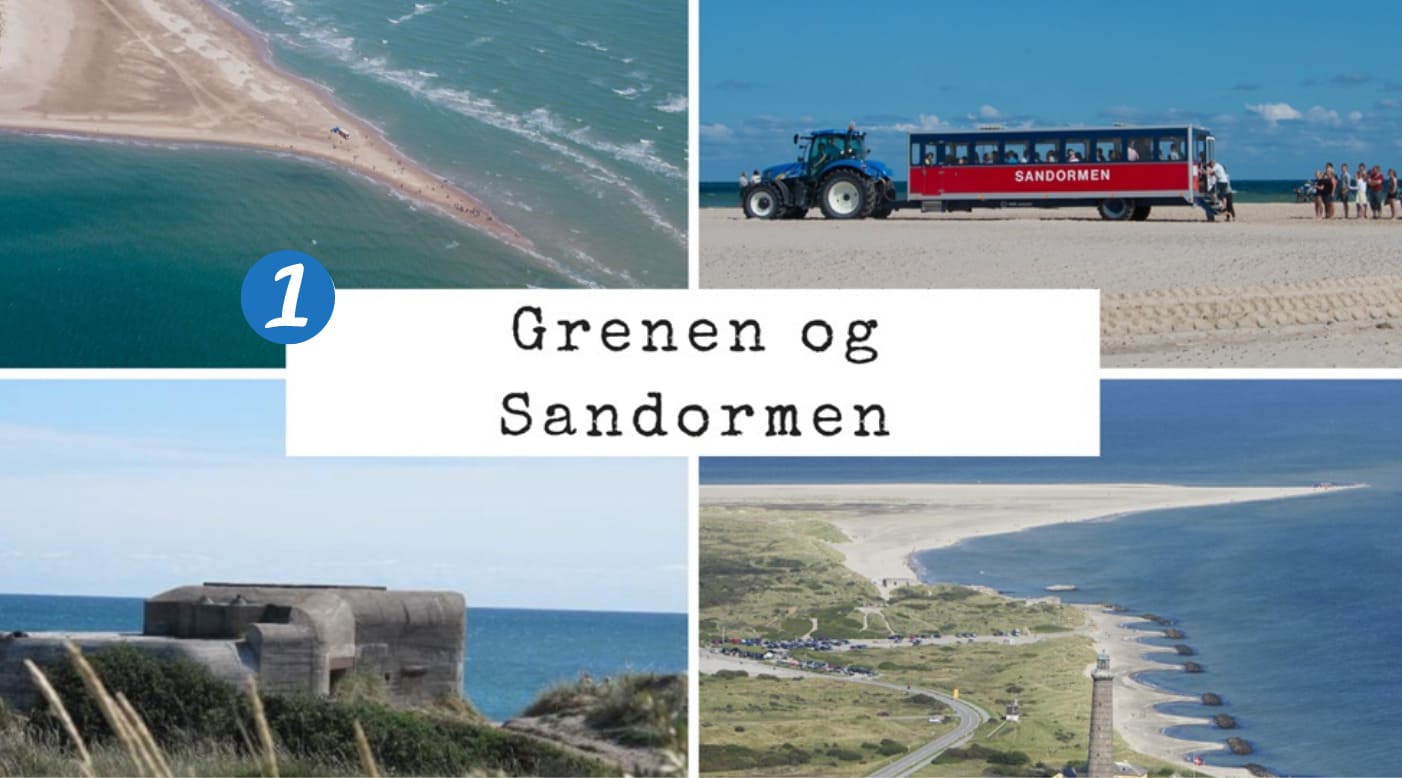
Grenen, north of Skagen, is one of Denmark's most popular summer excursions. If you arrive by car, you can park by Grenen Kunstmuseum before continuing. You can also walk or cycle from Toftegården; it is just over 3 km to the museum. From there, you can take Sandormen, the tractor bus that runs to the tip of Grenen during the high season.
It is also worth walking the last stretch to Denmark's northernmost point. The route along the coast, with sea, dunes, sky, and sunlight around you, is one of the finest walks in Denmark. At the end, Skagerrak and Kattegat meet, and you can stand with one foot in each sea.
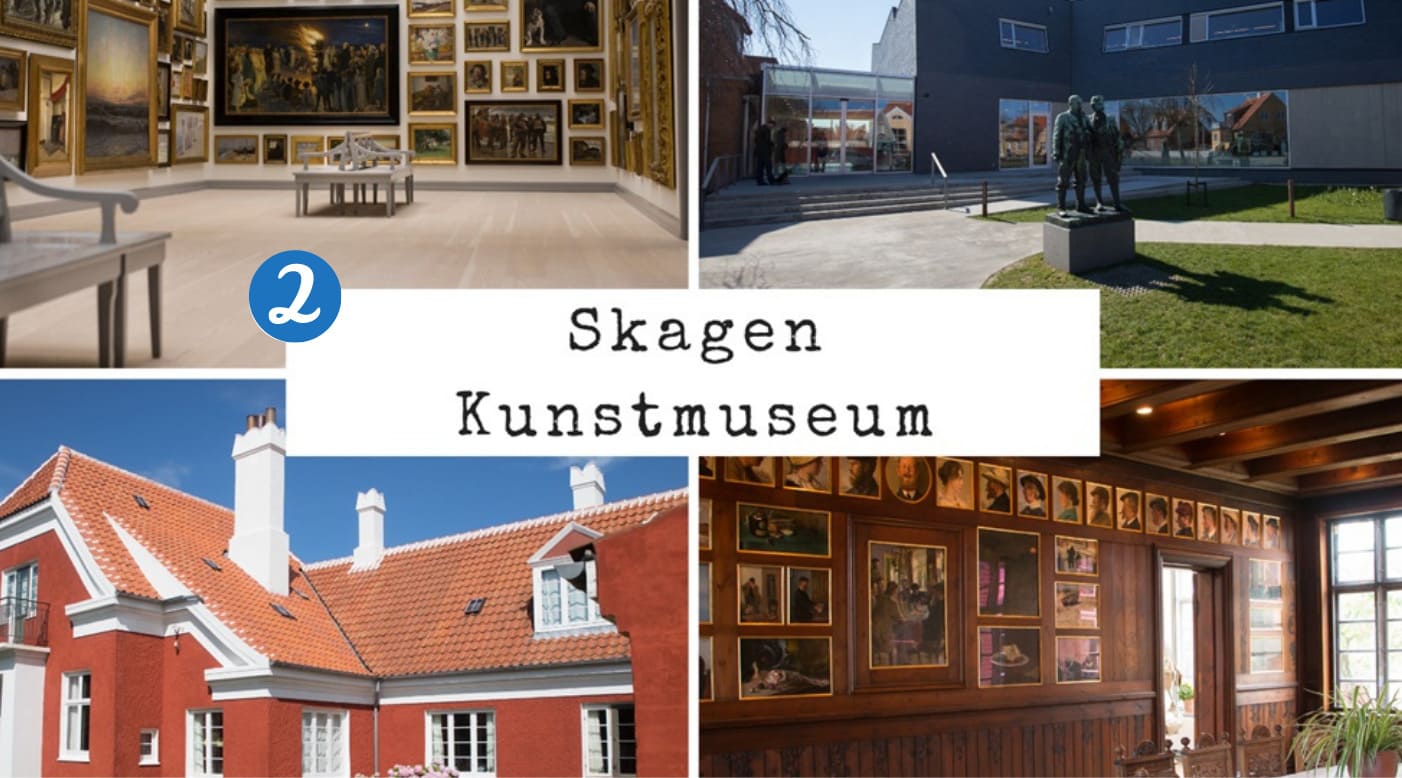
Skagen Museum opened in 1908 to preserve as much as possible of the Skagen Painters' art in the town that inspired them. Among the founders were Michael Ancher, P.S. Krøyer, and Laurits Tuxen, along with Degn Brøndum and pharmacist Viktor Klæbel. The artists were drawn to the fishing community and the unique Skagen light. Today the museum is one of Denmark's most visited and is well worth a visit.
Close to the museum is the home of Anna and Michael Ancher on Markvej, the same street as Toftegården. Anchers Hus has been open as a museum since 1967 and remains preserved much as it stood when Anna Ancher died in 1935.
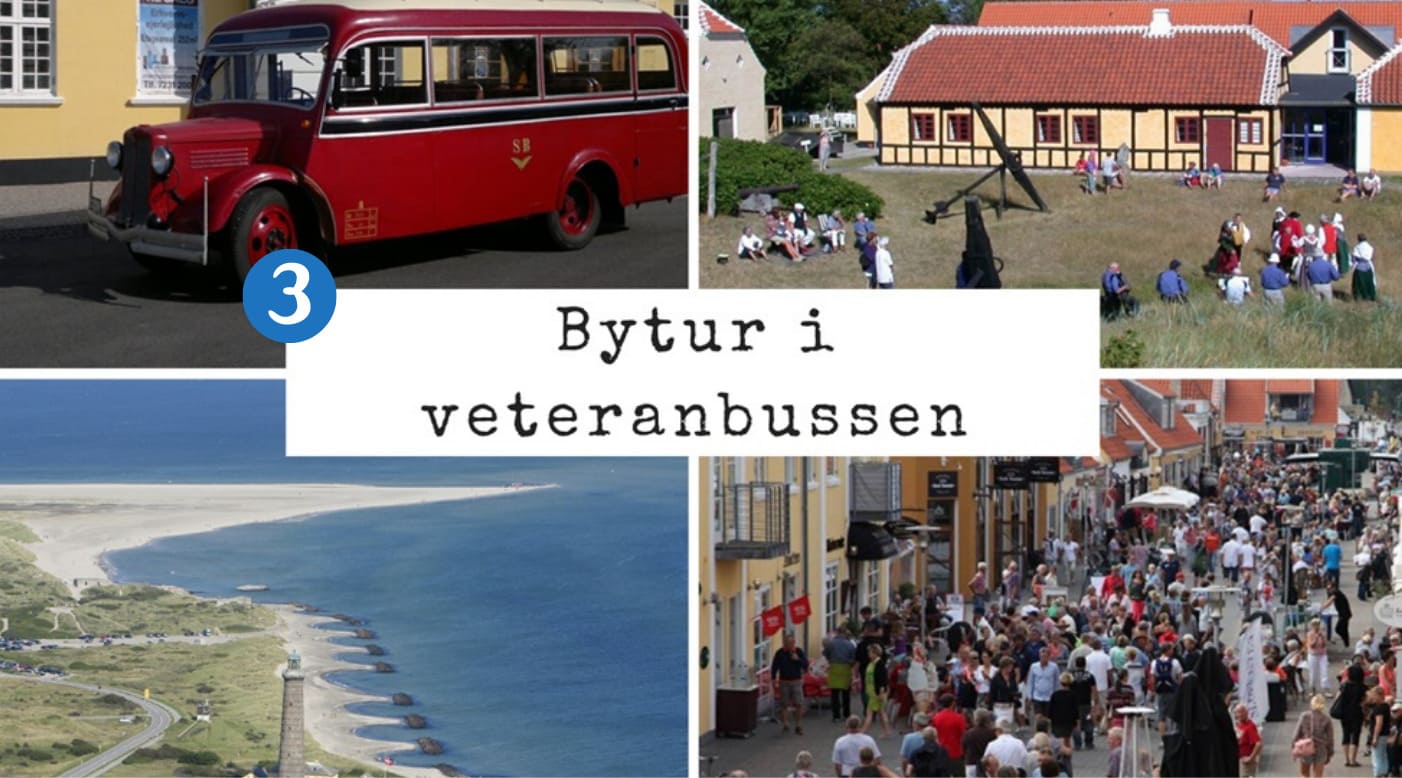
For a lovely start to your stay, take a guided tour in the vintage bus owned by the Maskinrummet museum in Skagen. The tour moves at an easy pace through the old neighbourhoods, around the harbour, past the lighthouses, and out to Grenen, with stories about Skagen then and now. The bus is a Bedford from 1937, Denmark's only preserved pre-war Bedford.
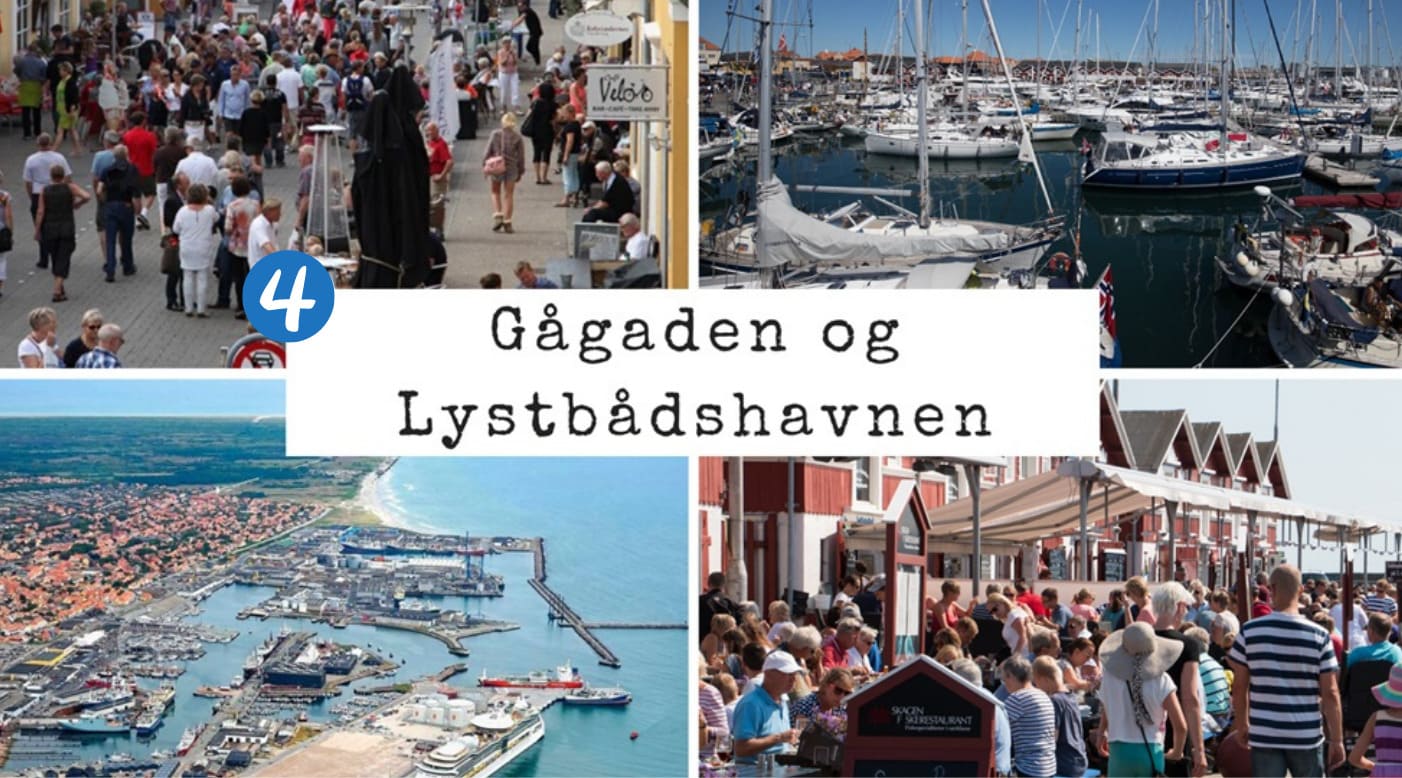
The pedestrian street, Sct. Laurentii Vej, is within walking distance of Toftegården. Its specialist shops give Skagen a classic shopping life that is still very much alive. When you get hungry, there are plenty of restaurants in the town centre and by the harbour.
If you would like fish, head to the harbour and the well-known red warehouses designed by architect Thorvald Bindesbøll. Enjoy the atmosphere, watch the fishing boats, and have something good to eat and drink.
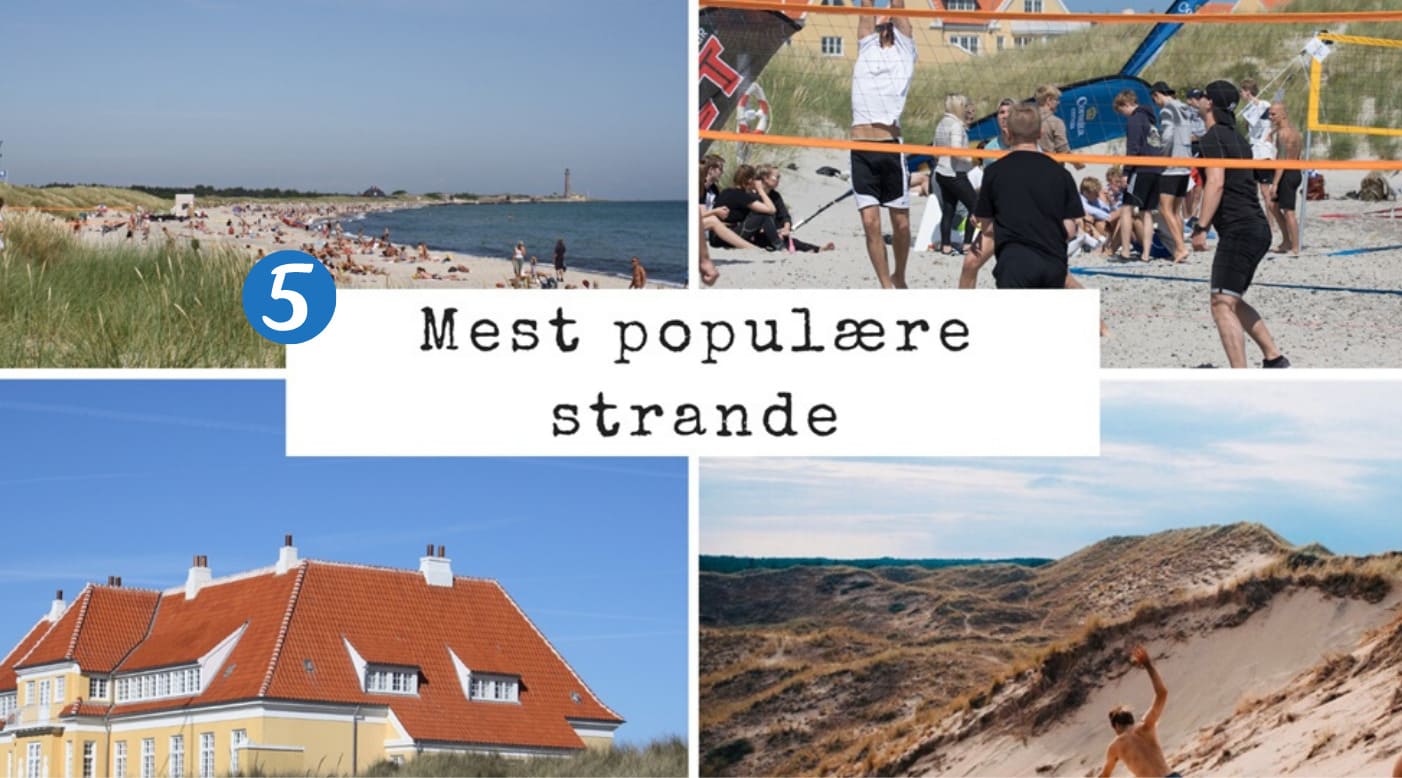
Skagen Sønderstrand is a beautiful, family-friendly beach close to town. This was where the Skagen Painters found inspiration for many of the works you can see at Skagen Museum today.
Højen, Old Skagen, or Nordstrand lies northwest of Skagen and is more exposed to the west wind. It is a wonderful beach, though families with small children may prefer the calmer water at Sønderstrand. In the evening, Old Skagen is the perfect place to watch the sun slowly sink into the sea.
The stretch from Damstederne to Hulsig Strand has many dunes, and near the harbour you can also see Klitgården, the former royal summer residence.
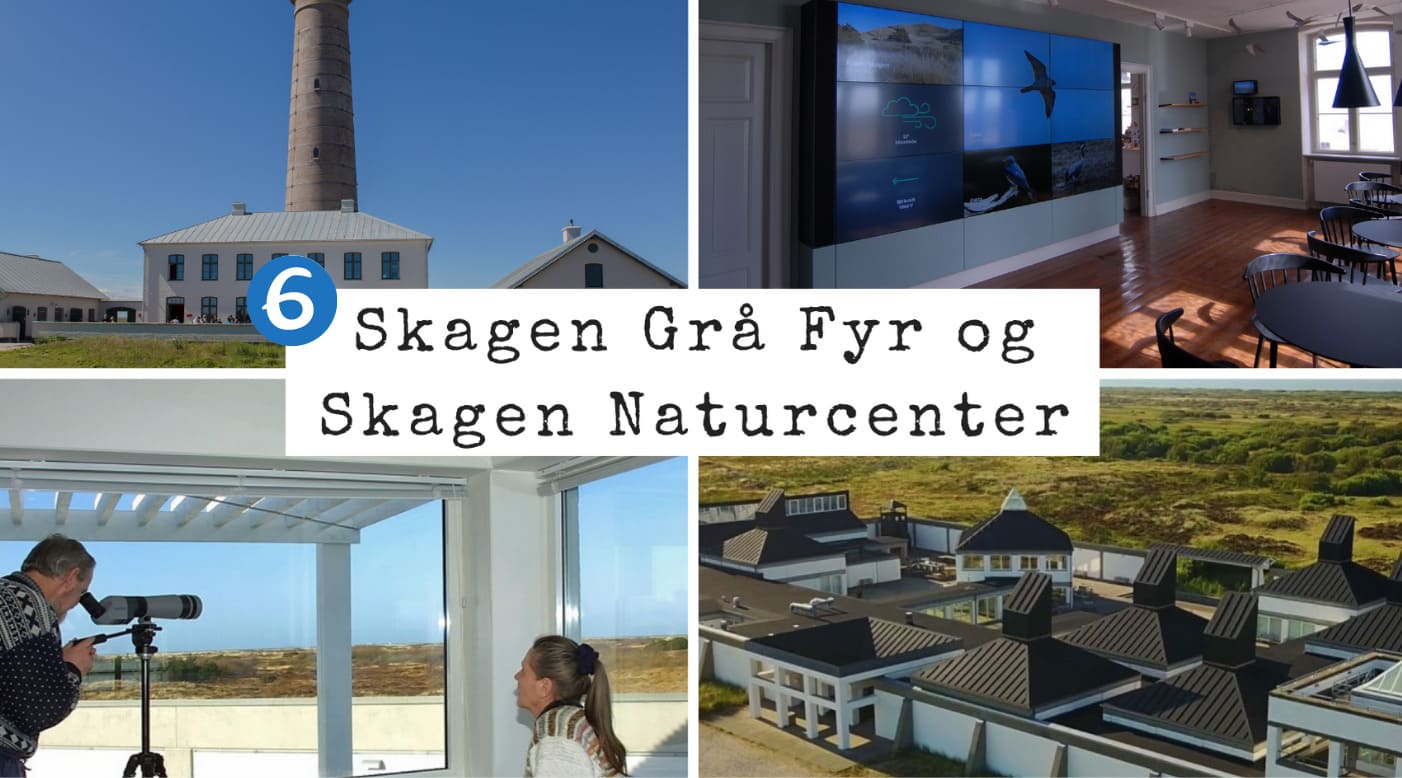
At the top of Denmark, Skagen Bird Observatory is part of Skagen Grey Lighthouse, set in beautiful nature toward Grenen. Skagen is famous among birdwatchers as a migration point where birds pass on their remarkable journeys. At the centre, you can explore migration routes virtually and enjoy the view from the top of the lighthouse.
Nearby is Skagen Odde Nature Centre, designed by Jørn Utzon, the architect behind the Sydney Opera House. The centre has interactive exhibitions about wind, water, light, and sand, and is absolutely worth visiting.
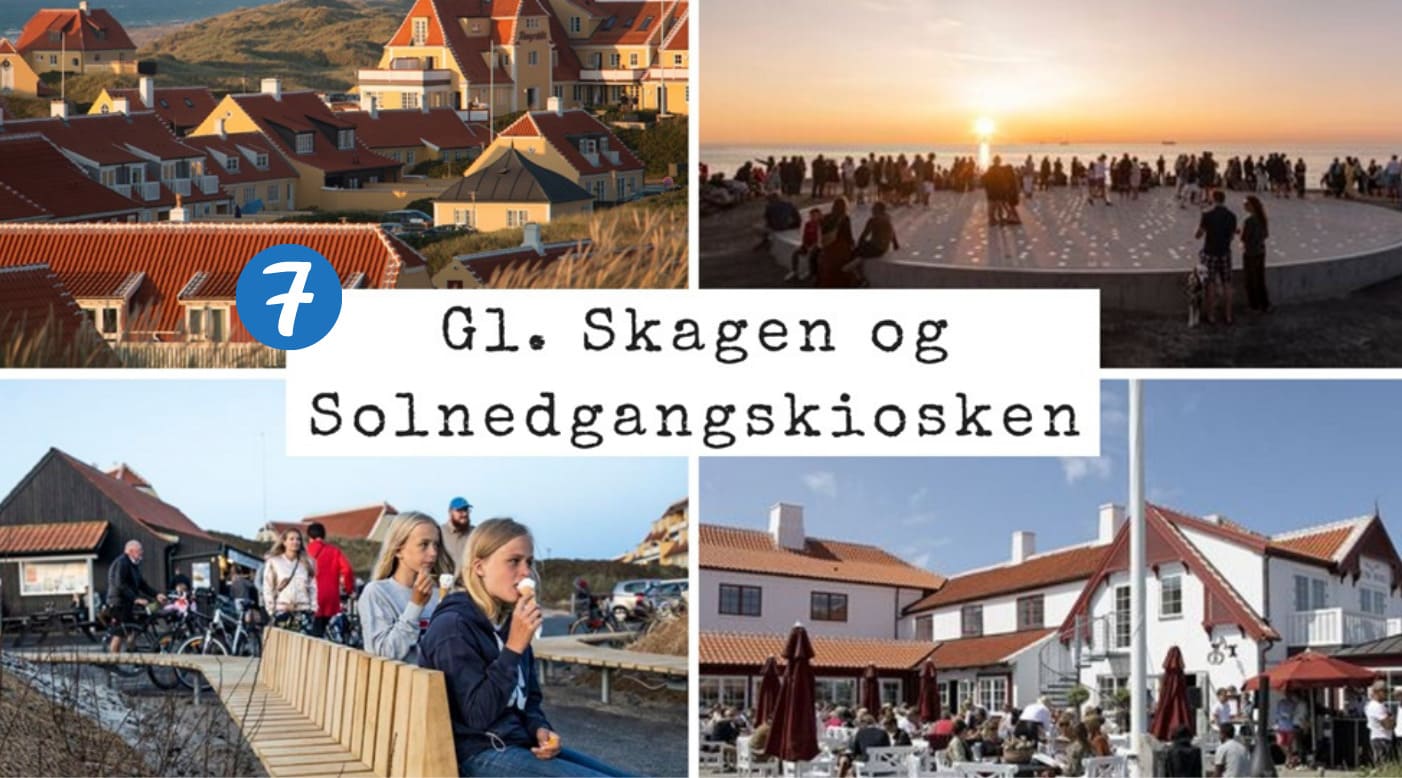
Højen, commonly known as Old Skagen, is an old fishing village northwest of Skagen. It offers raw nature, distinctive architecture, beautiful surroundings, and exceptional light, along with restaurants and seaside hotels.
The Sunset Kiosk in Old Skagen is famous for its atmosphere and breathtaking sunsets. Every evening people gather to enjoy the last light over the sea. The newer Sunset Square frames the experience with a large sun disc and benches around the square.
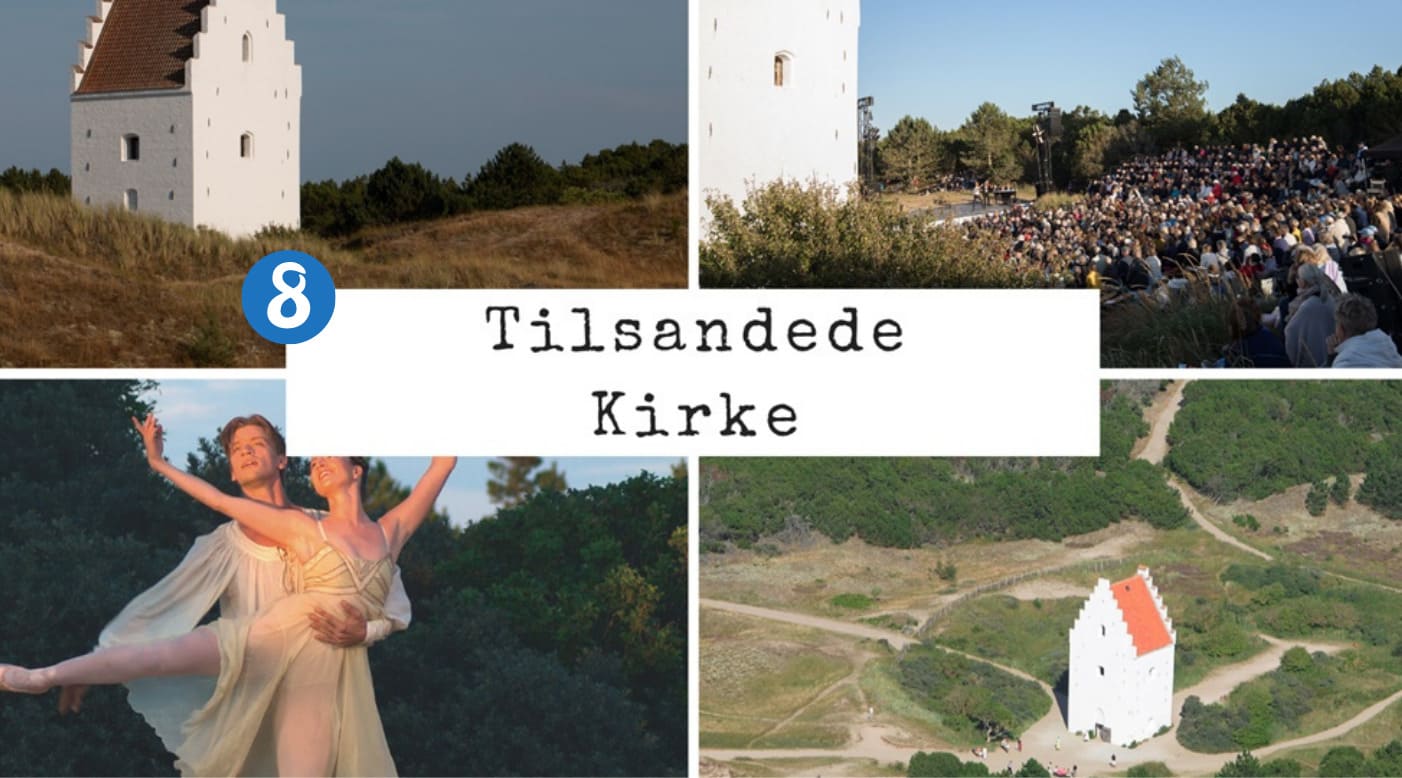
The Sand-Covered Church, originally Sct. Laurentii Church, was built in the late 1300s and was once the largest church in northern Jutland. Drifting sand gradually made it unusable, and by 1795 the congregation could no longer enter. Most of the church was demolished, but the tower remains and is now one of the area's best-known sights.
Every year the World Ballet traditionally ends its July tour in front of the Sand-Covered Church, creating a special performance setting among the remains of the old church.
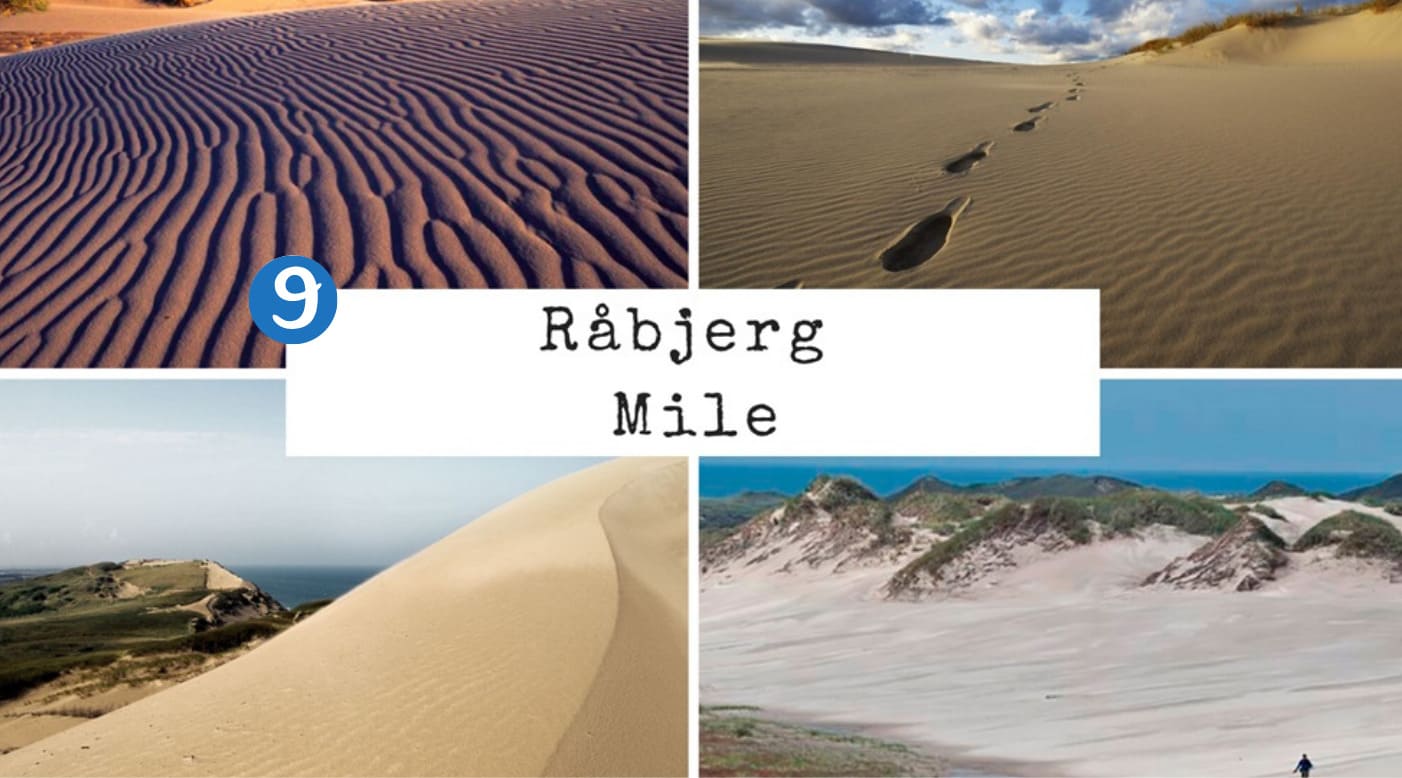
Råbjerg Mile is Denmark's and northern Europe's largest migrating dune, located near Bunken Klitplantage between Skagen and Ålbæk. It contains about 3.5 million cubic metres of sand, covers around one square kilometre, and moves roughly 15 metres east each year.
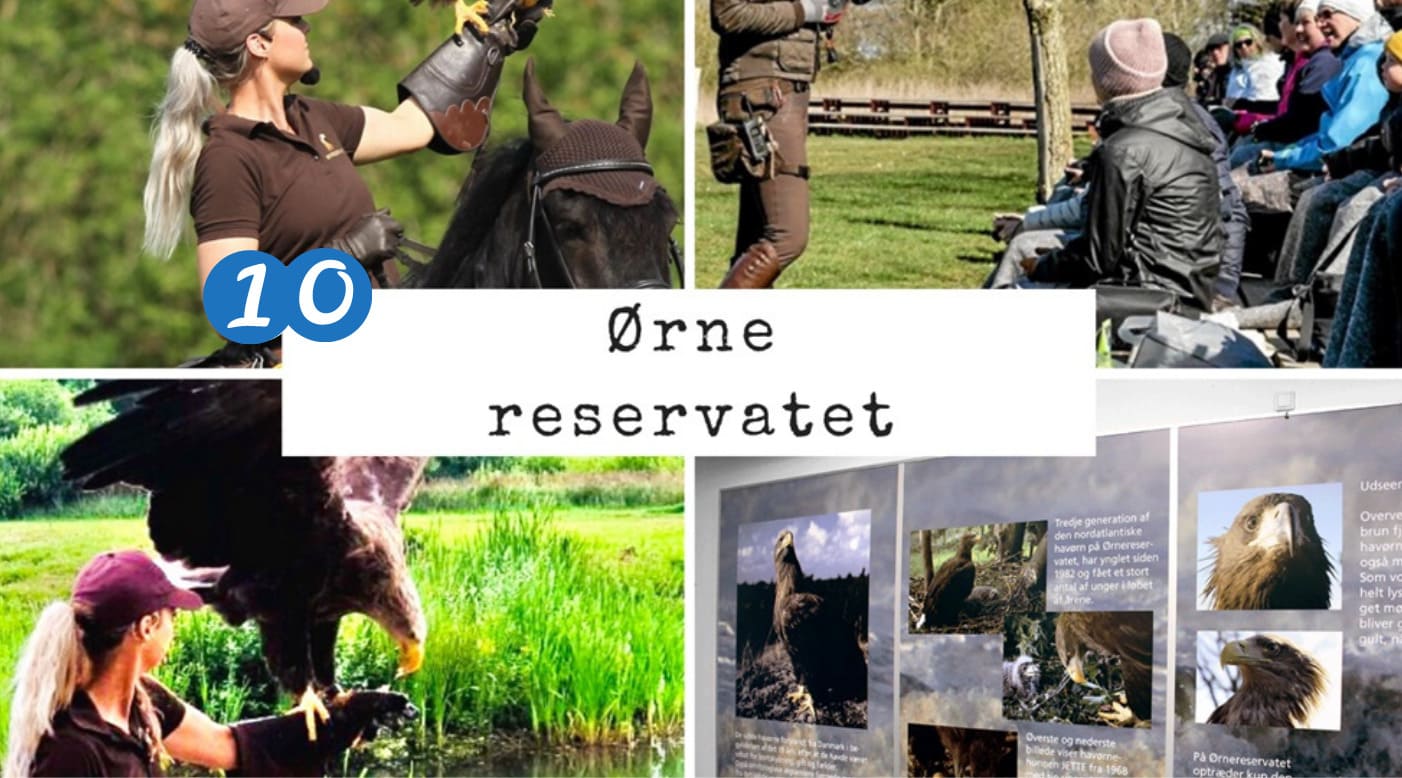
Not far from Skagen, on the road toward Hirtshals, you will find Eagle World. If you want a different and impressive experience, do not miss it. Here you can get close to birds of prey, and skilled falconers present demonstrations several times a day.